Ongoing archaeological excavations at Raghurampur and Vajrayogini villages in Munshiganj are uncovering remains of a Buddhist vihara and surrounding settlement believed to be more than a thousand years old. Researchers connect the site to the early life of Atish Dipankar Srijnan (980–1054 CE), the celebrated Buddhist scholar born in this region.
Traces of a vanished civilisation
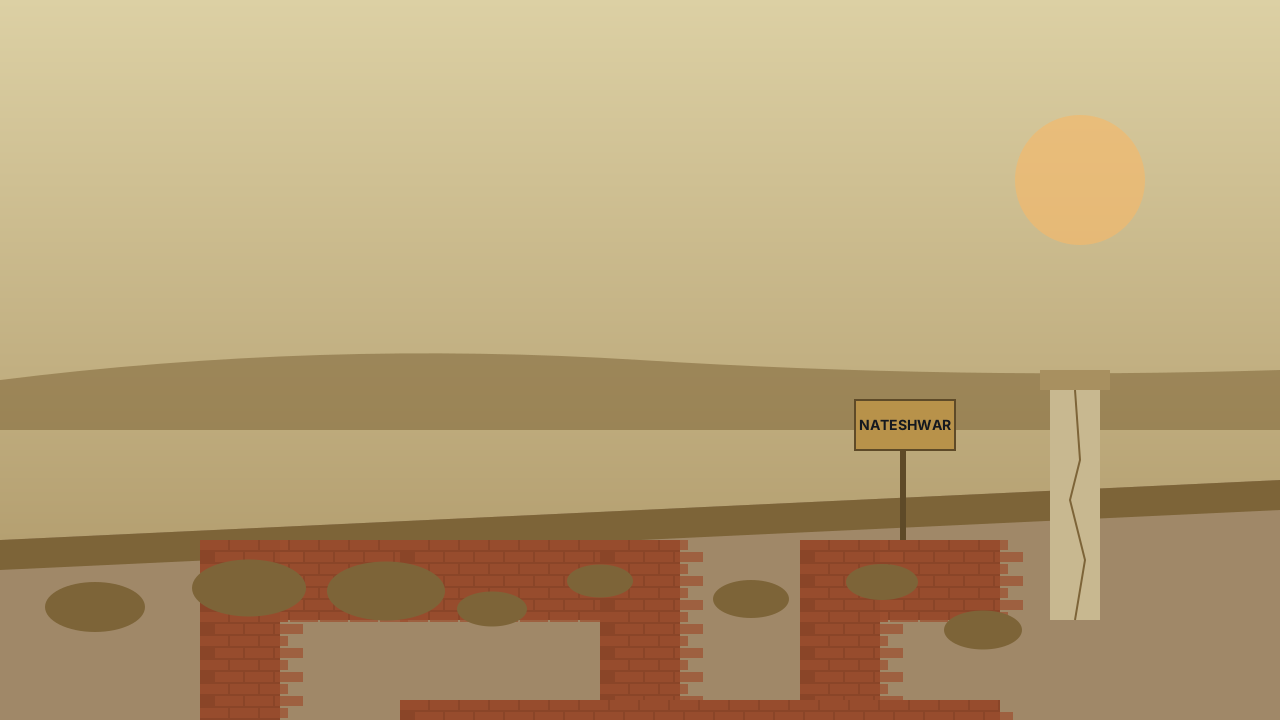
At Raghurampur, five 3.5-metre-square monastic cells and a substantial central wall — in places three to four feet thick — have been exposed. Carbon-14 testing of 26 artefacts at a laboratory in the United States has confirmed the site is more than 1,100 years old.
Findings from the excavation include pyramid-shaped stupas, broad walkways, halls, monks' quarters, terracotta and stone artefacts, baked brick walls, and the foundations of a prayer hall.
Atish Dipankar: a rediscovered history
Atish Dipankar — often called "the Light of Asia" — was born in Vajrayogini village in the historic Bikrampur region. He served as chancellor of the Bikrampur Mahavihara before travelling to Tibet at the invitation of King Chang Chub. There he spent sixteen years and composed 175 treatises on Buddhist philosophy, medicine, and engineering, dying at age 73.
The path ahead
Heritage scholars argue that with careful conservation and a planned archaeological park, the site could one day join the UNESCO World Heritage list. Properly managed, it could anchor a major Buddhist heritage tourism circuit across South Asia, drawing visitors and researchers from Tibet, Nepal, Thailand, China, and beyond.