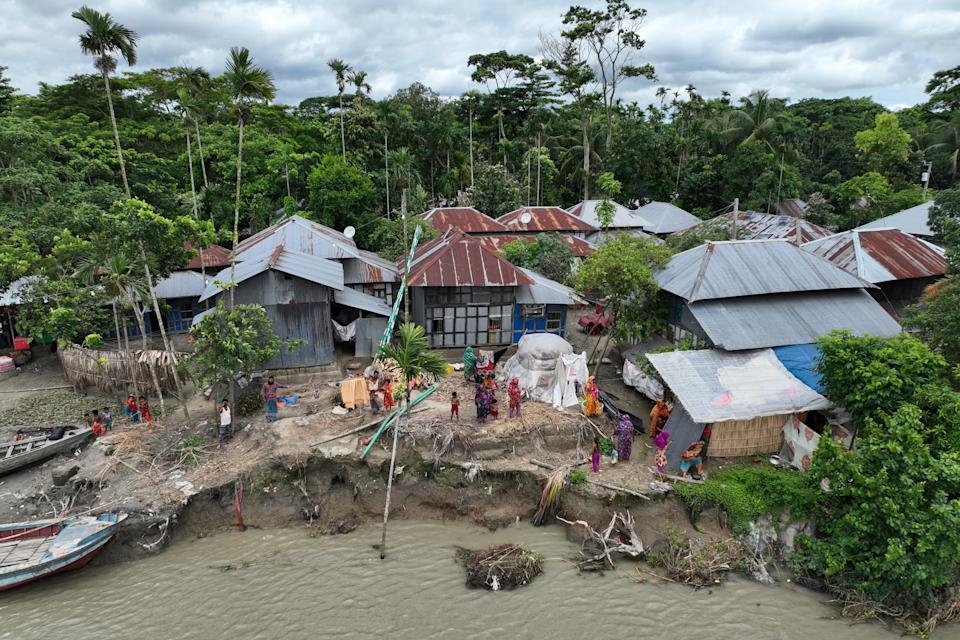
Each monsoon, riverbank erosion intensifies along the Meghna in Munshiganj's low-lying chars and riverside villages. According to the Ministry of Water Resources, Munshiganj is among the 20 districts in Bangladesh most vulnerable to erosion damage.
Hundreds of hectares lost each year
Nationally, riverbank erosion consumes around 8,700 hectares annually and displaces more than 200,000 people. Average erosion rates along the right and left banks of the Meghna are about nine and seven metres per year. Most large-scale collapses occur during the June–October monsoon season.
Schools, markets and farmland disappearing
Residents of affected villages describe markets, schools and farmland being lost to the river year after year. Many families have been displaced multiple times in a single lifetime. The toll on education is heavy: when schools collapse or relocate, many children drop out altogether.
Permanent protection works needed
Earlier projects funded by the Asian Development Bank used geo-textile bags to protect vulnerable banks under the Jamuna–Meghna River Erosion Mitigation Project. The technique proved cost-effective in trials, but long-term durability has been hampered by inconsistent maintenance funding. Local residents and civil-society groups argue that without sustained monitoring and budgetary commitment, the problem cannot be solved permanently.
Researchers note that although the Meghna is comparatively stable among major Bangladeshi rivers, the Padma–Meghna confluence and Lower Meghna course have shifted dramatically over the last five decades. Satellite imagery analysis between 1973 and 2021 has documented extensive erosion and char-formation cycles across the region.